

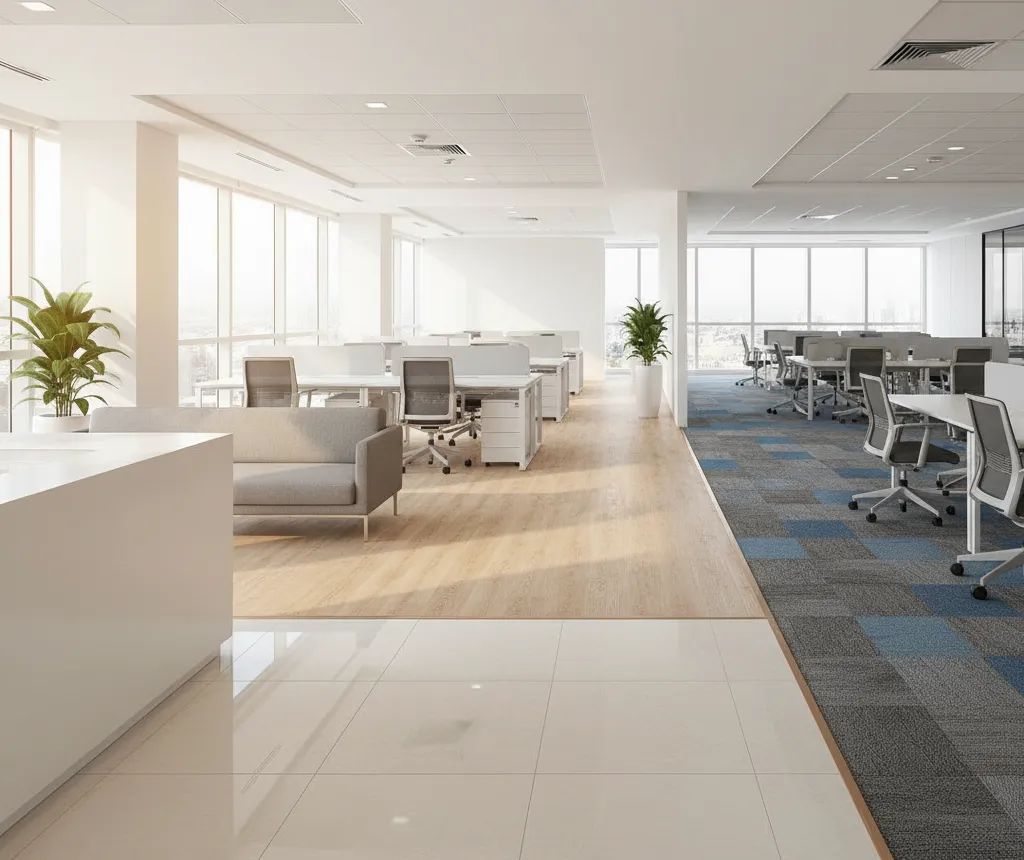
Commercial floors have to support daily business activity without becoming difficult to maintain. Office corridors, meeting rooms, reception areas and shared workspaces all experience different levels of foot traffic, furniture movement and cleaning.
The best flooring choice is therefore not based on appearance alone. Businesses should consider traffic patterns, maintenance, durability, comfort and the condition of the existing surface before making a final decision.
Start With the Way the Space Is Used
An office floor can experience constant movement throughout the day. Employees, visitors, rolling chairs, delivery carts and movable furniture all contribute to wear in different ways.
Before choosing a system, it helps to identify the busiest routes. Entrances, reception areas and corridors may need a different level of performance from private offices or low-traffic meeting rooms.
Consider the Needs of Office Environments
Businesses looking at commercial office flooring chicago should think about both appearance and practical use. A professional setting usually needs a clean, consistent finish that supports the overall design of the workplace.
At the same time, the floor should handle repeated foot traffic and routine cleaning. A surface that looks attractive but is difficult to maintain may create unnecessary work over time.
Think About Local Business Conditions
Different commercial properties face different demands depending on their location, building type and daily activity. Warehouses, offices, service businesses and mixed-use spaces may all require different flooring characteristics.
When evaluating commercial flooring elk grove, business owners should consider how the site is used rather than assuming every commercial floor requires the same solution. Local traffic, access and operating schedules can all influence the project.
Check the Existing Surface First
The condition of the substrate plays a major role in the final result. Old coatings, cracks, adhesive residue or uneven areas may need attention before a new floor is installed.
A proper inspection helps identify these issues early. It also gives the contractor a better understanding of what preparation, repair or cleaning work may be required.
Balance Appearance With Maintenance
Commercial interiors often rely on flooring to support the overall visual style. Color, texture and reflectivity can make a workspace feel brighter, cleaner or more modern.
However, appearance should always be considered alongside maintenance. A finish that shows every mark may require more frequent cleaning, while highly textured surfaces can take more effort to maintain.
Plan Around Furniture and Equipment
Offices contain desks, cabinets, chairs and equipment that can create repeated pressure on certain areas. Rolling chairs and movable furniture can also affect the surface over time.
The flooring system should be selected with these conditions in mind. It is also useful to think about whether the layout may change in the future, especially in flexible or growing workplaces.
Consider Cleaning Routines
Some commercial spaces are cleaned daily, while others receive deeper cleaning less frequently. The flooring should work with the methods and products already used by the maintenance team.
Before installation, businesses should ask which cleaning products are suitable and whether any special care is required. Simple maintenance instructions can help protect the appearance of the floor.
Think About Business Downtime
Installing new flooring may require parts of the building to be closed temporarily. Preparation, application and curing can all affect how quickly the area returns to normal use.
Planning the work around weekends, quieter periods or staged sections can reduce disruption. The exact approach depends on the size of the project and the flooring system selected.
Do Not Overlook Safety
Commercial floors should also support safe movement through the workplace. Areas near entrances, kitchens or service zones may occasionally become wet or collect dirt.
The right level of texture can help address these conditions. The goal is to create a practical balance between grip and ease of cleaning.
Plan for Future Changes
Businesses rarely stay the same. Teams grow, furniture moves, and layouts change as operational needs develop.
Choosing a versatile flooring system can make future changes easier. A neutral, practical finish may continue to work well even if the space is reorganized or used differently later.
Conclusion
Choosing commercial flooring requires a clear understanding of how the workplace functions. Traffic, appearance, maintenance, safety and downtime all influence the final decision.
A carefully planned floor can support both day-to-day operations and long-term changes. By matching the flooring system to the actual needs of the business, owners can create a workspace that remains practical, professional and easier to manage.